Jorge Enrique Cartaya, Ph.D.
Caribbean Literature, Comparative Literature, Environmental Humanities

Biography
I’m a scholar of Caribbean literature, comparative literature, and the environmental humanities based in Miami, Florida. My research interests are shaped in part by my experiences of the Caribbean and South Florida, where hurricanes and environmental change are often matters of everyday life rather than distant possibilities. I received my Ph.D. in Comparative Literature from Cornell University in 2025, following graduate study at Florida International University.
My research examines how Caribbean writers and artists give form to environmental crises and the histories of colonialism, migration, and displacement that shape their experience. My first book manuscript, To Stand with Wet Feet: Elemental Crisis and Caribbean Environmental Form, explores the relationships among hurricanes, floods, seawater, and literary expression across the Caribbean’s multilingual traditions. The project grew out of my doctoral dissertation, which received the Caribbean Studies Association’s 2026 Best Dissertation Award. My article, “Seawater, Form, and the Limits of Evidence in M. NourbeSe Philip’s Zong!,” is forthcoming in ISLE: Interdisciplinary Studies in Literature and Environment.
I currently teach English composition at Miami Dade College, where I also work as an academic support writing coach. Across my teaching and academic-support work, I’m dedicated to helping students develop the practices of close reading, critical inquiry, and scholarly writing, and making those practices accessible to students from a wide range of educational backgrounds.
Writing
- BookTo Stand with Wet Feet: Elemental Crisis and Caribbean Environmental FormBook manuscript in advanced revision
- Article“Seawater, Form, and the Limits of Evidence in M. NourbeSe Philip’s Zong!”ISLE, forthcoming
Recognition
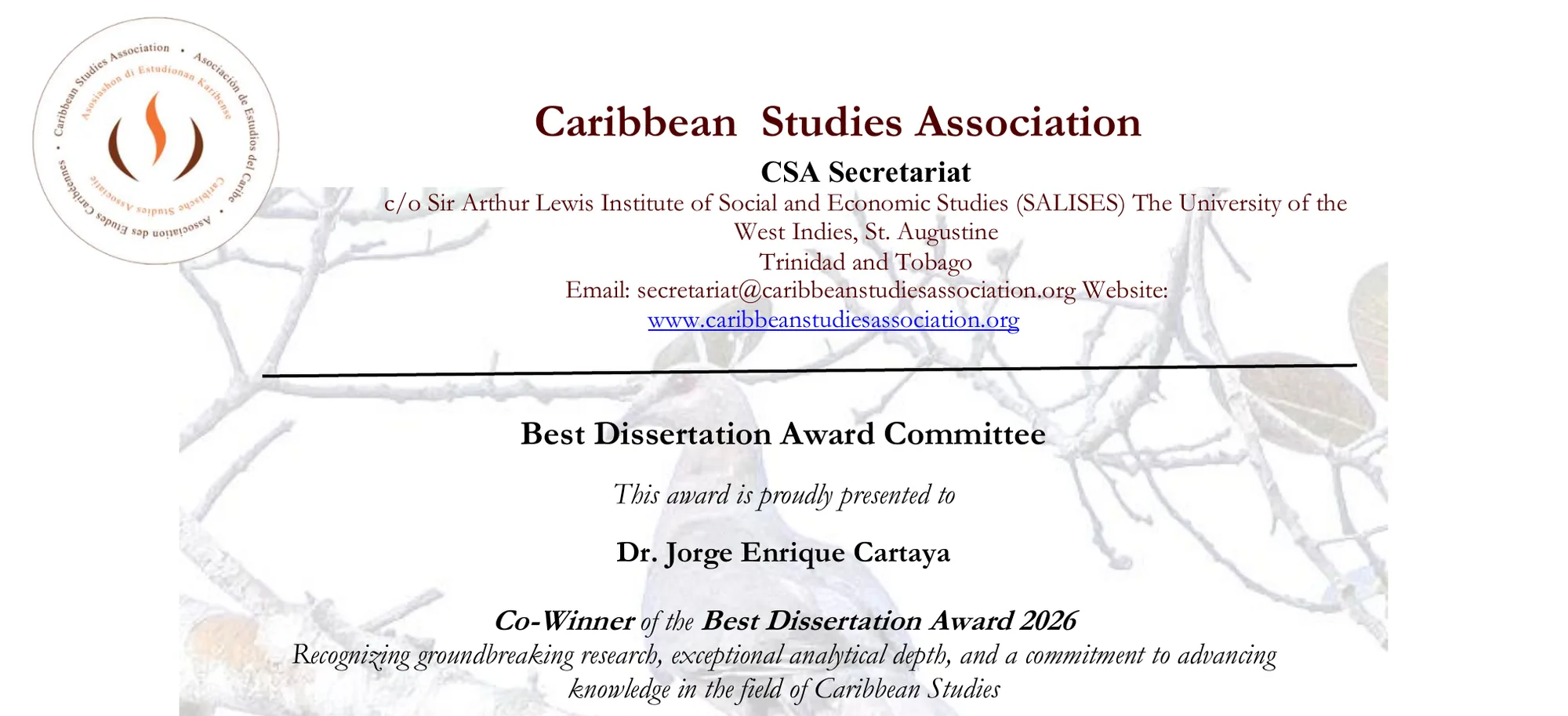
Best Dissertation Award, 2026
Caribbean Studies Association
Co-winner · Presented in Kingston, Jamaica, 2 June 2026
“…the Caribbean becomes a site from which the planetary crisis can be theorized and understood.”
— Best Dissertation Award Committee, Caribbean Studies Association